The names of things
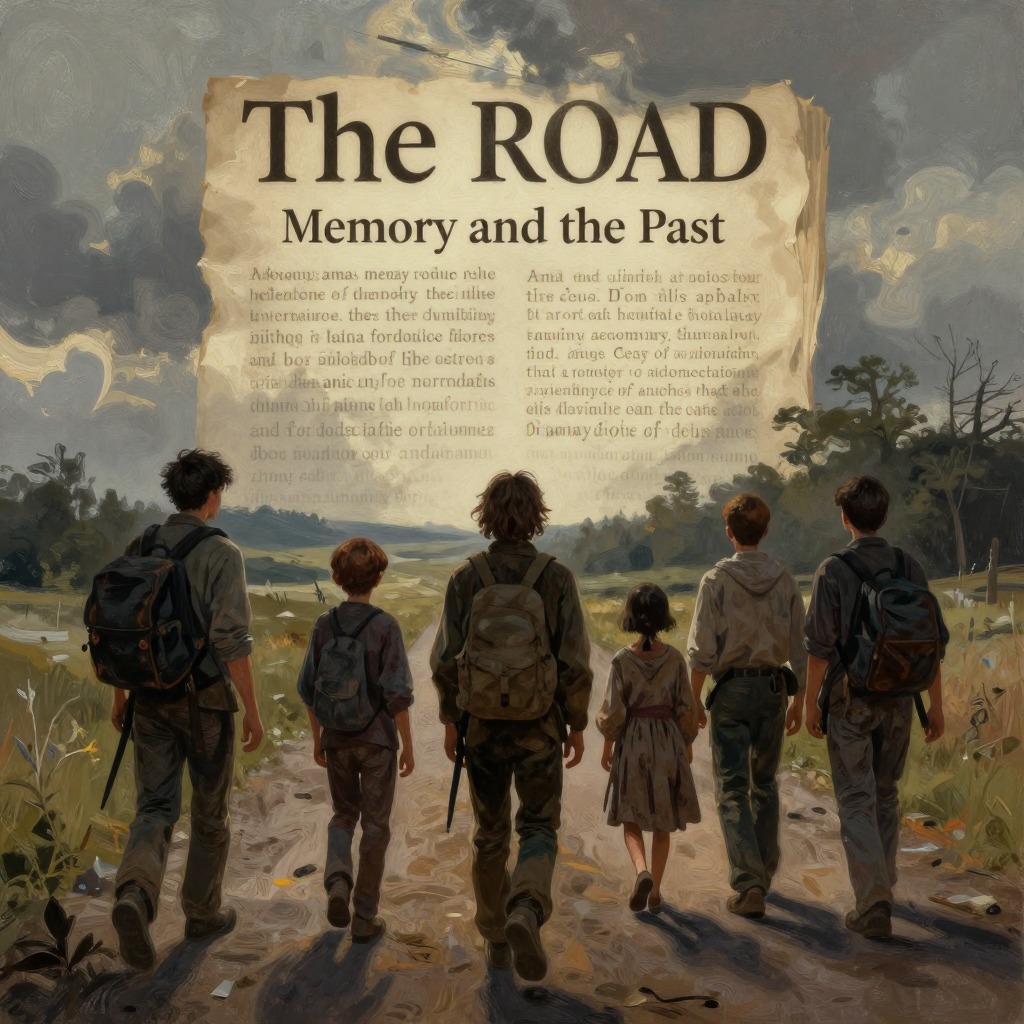
The names of things is a central motif in Cormac McCarthy's The Road, tracing the slow dissolution of language and meaning as the world collapses. The man and the boy move through a landscape where the names of objects, places, and even moral concepts are fading, their referents gone or transformed. This erosion is not merely a linguistic phenomenon but a profound existential condition, reflecting the loss of the world itself and the struggle to hold onto meaning in the face of oblivion.
The Erosion of Language and the World
As the man and the boy travel south, the world shrinks around a "raw core of parsible entities" . The names of things—colors, birds, things to eat—slowly follow those things into oblivion. The man reflects that "the sacred idiom shorn of its referents and so of its reality" is drawing down like something trying to preserve heat, threatening to wink out forever . This process is not abstract; it is lived daily. The man and the boy are "each the other's world entire" , a phrase that underscores how their relationship becomes the last repository of meaning when the external world no longer sustains it. The map, once a tool for navigation, becomes a tattered collection of limp pages sorted into leaves and numbered with crayon , its names of states and towns now hollow echoes of a vanished political order. The man's billfold, worn to a cornershaped hole in his trousers, contains a driver's license, credit cards, and a picture of his wife—artifacts of a world where names and identities were fixed and meaningful. He pitches the sweatblackened leather into the woods and lays the photograph in the road , a deliberate act of letting go of the names and faces that once anchored his life.
The Persistence of Naming in the Ruins
Despite the erosion, the act of naming persists as a fragile but necessary practice. The man and the boy continue to use the names of things—"canned goods" , "sextant" —even as those objects become rare or their original functions are lost. The sextant, a brass instrument for celestial navigation, is found on the wrecked ship Pájaro de Esperanza and is described as "the first thing he'd seen in a long time that stirred him" . Its name carries the weight of a lost art, a precision and beauty that no longer have a place in the world. The man holds it to his eye and turns the wheel, but he knows there is no sun or stars to navigate by. The name "sextant" remains, but its referent—the ability to chart a course by the heavens—is gone. Similarly, the canned goods in the bunker are labeled with names like "pears" and "peaches" , and the boy reads them aloud, as if the act of naming can conjure the richness of a vanished world. The man tells him, "That says pears," and the boy repeats it, affirming the connection between word and thing even as the world that produced those words has disappeared.
The Names of Things as a Moral and Existential Anchor
The names of things also carry a moral weight. The man and the boy define themselves through the names they choose: "We're the good guys" , "We're carrying the fire" . These names are not inherited from a stable society but are self-created, fragile affirmations of identity in a world where the old moral categories have collapsed. The boy's insistence on helping others—the old man Ely, the thief, the little boy he glimpses—is an attempt to keep the name "good" attached to actions, even when the man argues that survival requires abandoning such names. The man's final lesson to the boy is to "carry the fire" , a name for a principle of hope and goodness that transcends the physical world. The boy, after his father's death, asks the stranger who finds him, "Are you carrying the fire?" , using the name as a test of moral kinship. The stranger's affirmative answer allows the boy to trust him and join his family. In this way, the names of things—even when their referents are lost—become the last threads of meaning, the only way to navigate a world where everything else has been stripped away. The novel ends with an image of brook trout in mountain streams, their backs bearing "vermiculate patterns that were maps of the world in its becoming" , a final name for a lost world of beauty and order that can never be restored but must be remembered.